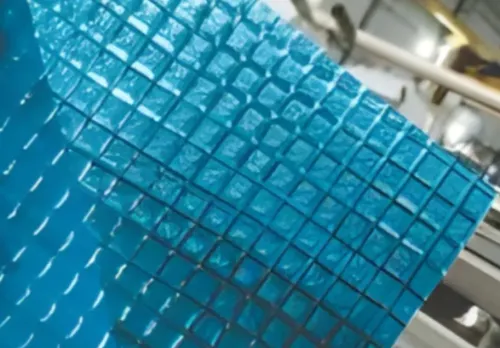
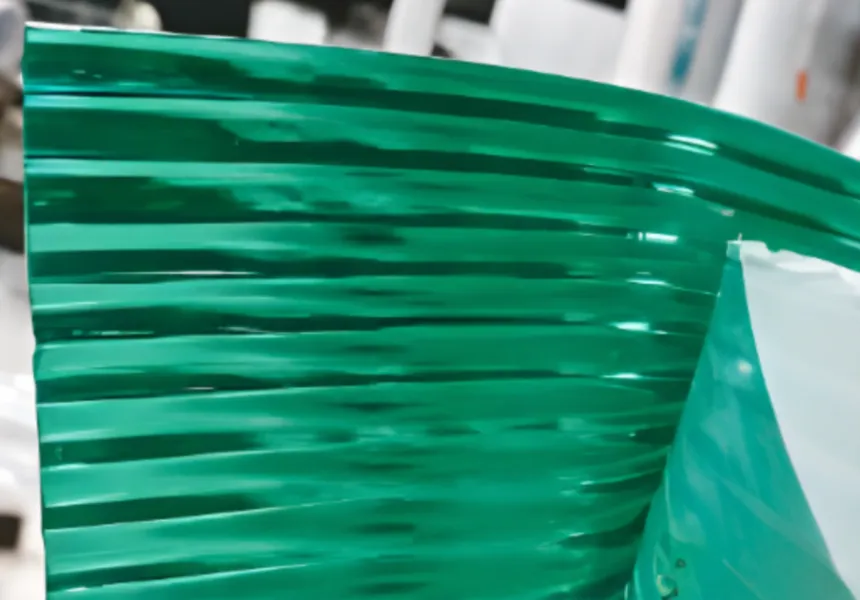
Modern interior projects often need partitions that create separation without making a space feel enclosed. Designers may want privacy, natural light, visual texture, and a contemporary appearance within the same material choice. A PC Fluted Sheet can be useful for these requirements because its linear surface character creates visual interest while allowing light to remain part of the design.
For architects, interior designers, builders, and commercial property developers in Delhi, fluted polycarbonate can provide an alternative to conventional opaque partitions where lightweight construction and distinctive aesthetics are priorities.
Why Fluted Surfaces Are Popular
Fluted surfaces introduce repeated linear patterns that can add depth to otherwise plain partitions and panels.
In contemporary interiors, these vertical or linear details are often used to create a clean architectural appearance. When incorporated into polycarbonate, the effect can combine decorative styling with practical material characteristics.
Instead of treating a partition purely as a divider, designers can make it an intentional visual feature.
Where PC Fluted Sheet Can Be Used
The material can suit several interior and architectural applications depending on the sheet specification.
Potential uses include:
- Office partitions
- Reception areas
- Decorative screens
- Retail interiors
- Commercial dividers
- Display areas
- Feature panels
- Workspace separation
- Hospitality interiors
- Selected architectural installations
The intended use should always determine the required thickness, panel dimensions, supporting structure, and surface specification.
Create Privacy Without Heavy Walls
Solid masonry and opaque panels provide separation but can reduce the visual openness of an interior.
Transparent glazing maintains openness but may provide too little privacy.
Fluted polycarbonate can offer another approach. Its patterned surface can distort direct views while allowing light to move through the space.
This is particularly useful for office layouts where teams need defined zones without creating a series of dark enclosed rooms.
The actual privacy level should be evaluated with a sample because it can vary according to lighting, viewing distance, sheet colour, and pattern.
Natural Light Can Travel Between Zones
Partition planning affects how daylight reaches interior areas.
When opaque partitions are placed between windows and workspaces, daylight penetration can be reduced. A translucent or light-transmitting partition can help maintain brightness deeper within the space.
For commercial properties in Delhi, this can be especially useful when renovating layouts where existing windows cannot easily be repositioned.
PC Fluted Sheet can therefore support space planning while maintaining a visual connection with available light.
Vertical Patterns Can Influence Perceived Height
Interior materials also affect how people perceive proportions.
Vertical fluted patterns can visually emphasize height and create a sense of structure. Designers may use this effect in reception areas, corridors, retail spaces, or compact commercial interiors.
The pattern should still complement surrounding materials.
Wood, metal, stone, painted surfaces, and lighting should be considered together rather than selecting the fluted panel independently.
Consider Framing Carefully
The appearance of a fluted sheet depends significantly on how it is framed.
Bulky or poorly aligned supporting profiles can reduce the visual impact of an otherwise refined panel.
Architects should determine frame dimensions, panel joints, edge treatment, and fixing details during the design stage.
For large panels, structural stability becomes particularly important.
Check the Sheet Under Actual Lighting
Lighting can dramatically change the appearance of a textured translucent material.
A fluted sheet placed near a window may look different from the same sheet under warm artificial lighting. Backlighting can produce another effect entirely.
For important interior installations, reviewing samples in the intended environment is worthwhile.
Designers can assess:
- Privacy from both sides
- Light transmission
- Shadow patterns
- Surface texture
- Colour interaction
- Appearance at different viewing distances
This can prevent surprises after installation.
Maintenance Should Be Part of Design Planning
Decorative partitions need to remain visually attractive after regular use.
Cleaning methods should be compatible with polycarbonate. Abrasive pads and aggressive chemicals can affect polymer surfaces, so suitable cleaning procedures should be established.
In busy commercial spaces, consider whether the panel will frequently be touched and whether maintenance teams can access both sides easily.
Choose the Material for a Clear Design Purpose
A PC Fluted Sheet should not be specified simply because fluted surfaces are fashionable.
It works best when the linear texture solves a practical design requirement—such as privacy, daylight transmission, visual zoning, or decorative emphasis.
For architects and interior designers handling projects in Delhi, U Decor provides polycarbonate sheet options that can be evaluated according to application, dimensions, finish, and project conditions.
A well-planned fluted installation can create separation without visual heaviness. When lighting, framing, privacy, and surface treatment are considered together, the sheet becomes an architectural component rather than merely a partition material.
Keywords