
A Delhi roofing quote can look complete while hiding incompatible profiles, unusable overlaps, missing fasteners or an unpriced unloading charge. By the end, you will be able to define the sheet, calculate effective coverage, compare inclusions and record the delivery and warranty details that protect your order.
Key takeaways
- Choose solid, multiwall or corrugated construction before comparing prices.
- Record thickness, colour, daylight transmission and corrugation profile.
- Calculate effective coverage from the sheet width and overlap.
- List fixings, delivery, unloading and installation separately on the purchase order.
Start with the construction, thickness and daylight requirement
A quotation is not comparable until you choose the construction: solid, multiwall or profiled corrugated polycarbonate. Record the exact thickness, colour and required daylight transmission; a 10 mm solid panel is not equivalent to a 10 mm hollow panel in stiffness, weight, insulation or fixing.
| Construction | What to settle | Why it changes the quotation |
|---|---|---|
| Solid sheet | Exact thickness, colour and light transmission | Clear, impact-resistant glazing with no internal cells; weight and support demand rise with thickness |
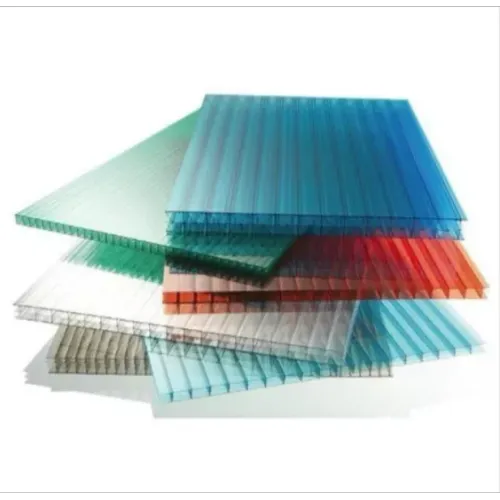
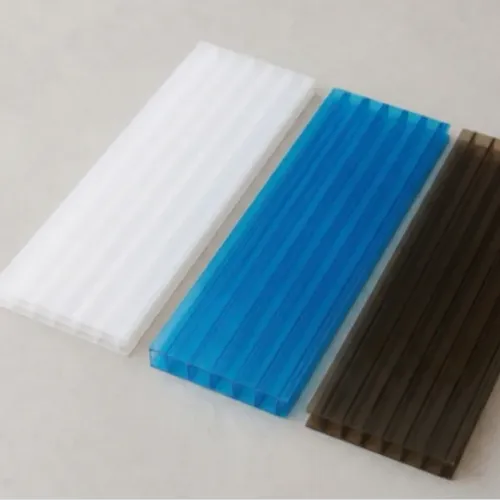
| Multiwall or hollow sheet | Cell structure, thickness, colour and light transmission | Internal chambers affect insulation, stiffness, edge finishing and compatible closures |
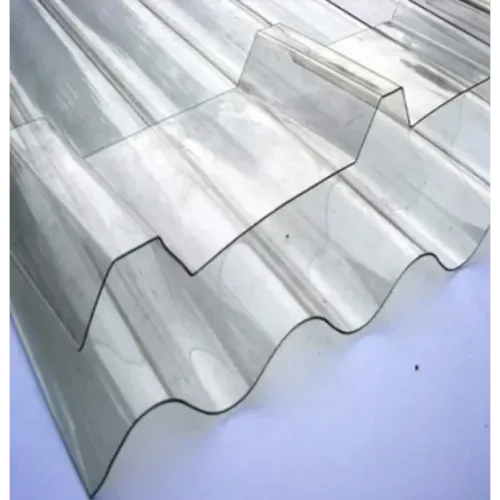
| Profiled corrugated sheet | Profile name, pitch, crest height, thickness, overall width and usable cover width | Corrugation geometry controls side laps, purlin spacing, screw positions and the number of sheets |
Common market ranges are about 2–12 mm for solid sheets, 4–25 mm for multiwall sheets and 0.8–2.0 mm for corrugated sheets. Treat those as market ranges, not a specification: request the manufacturer grade and exact measured thickness.
Your polycarbonate sheet order details should state:
- Roof opening length and width, panel length, nominal width and effective cover width after laps
- Required daylight result, such as clear, opal or bronze, plus the target light-transmission percentage
- Which face has UV protection, and whether that face must face the sky
- Delhi delivery address, required quantity and whether cutting, edge tape or closures are included
If daylight is the purpose, do not write “transparent” alone. Ask for the tested light-transmission value for the selected colour and thickness.
Specify corrugation geometry and calculate effective roof coverage
A 10-metre roof width divided by a sheet’s nominal width will overstate coverage. Use the usable cover width after the side lap, and use the usable length after any end lap.
Record these polycarbonate corrugated sheet specifications before calculating quantity:
- Profile name, crest-to-crest pitch and crest height or overall depth
- Sheet thickness, nominal width, nominal length and minimum permitted bend radius
- Effective cover width after the specified one- or two-crest side lap
- End-lap length, support spacing, screw positions, washer type and edge clearances
- Cut-outs, edge trims and the direction of the UV-treated face
For sheets running from eave to ridge, calculate across-slope quantity as roof width ÷ effective cover width, rounded up. Calculate down-slope rows as roof length ÷ effective panel length, where effective panel length equals nominal length minus the end lap between rows.
A 10,000 mm-wide by 6,000 mm-slope roof using 1,050 mm sheets with 980 mm effective cover and 3,000 mm sheets with a 200 mm end lap needs 11 sheets across and 3 rows down: 33 panels before cut-outs or breakage.
Ask the quotation to show nominal sheet dimensions, gross sheet area, net covered area, lap allowances and wastage separately. Edge trims and openings reduce installed coverage, so a gross-area total cannot verify the order by itself. Two profiles with identical thickness remain incompatible if their pitch, crest form or fixing positions differ.
Match thickness and fixing details to the roof structure
A supplier needs the roof’s span, support layout and exposure conditions before selecting thickness. A 10 mm solid panel is not equivalent to a 10 mm multiwall or corrugated panel: stiffness, weight, insulation and fixing requirements differ.
1. Send the construction type—solid, multiwall or profiled corrugated—plus profile name, pitch, crest height, thickness, panel length, effective cover width, support spacing, roof slope, design loads and minimum permitted bend radius. Your polycarbonate corrugated sheet specifications must also state screw positions, washer type, edge clearances and side- and end-lap requirements.
2. State the temperature range and sheet length. Polycarbonate expands about 0.065 mm/m·°C; a 2 m sheet across a 50°C change moves roughly 6.5 mm. Require oversized holes or a proprietary movement-fixing system, not tight screws that restrain the panel.
3. Identify the UV-treated face and request visible-light transmission plus solar factor or shading coefficient for the chosen clear, opal, bronze, grey or solar-control grade. Colour alone does not define daylight or heat gain.
4. Request the tested fire standard and classification, such as EN 13501-1, against the exact grade, thickness and mounting assembly. Do not transfer a rating from another thickness.
5. Describe fumes, solvents, detergents, oils, sealants and other chemicals contacting the roof, including concentration and temperature. The supplier must confirm compatibility and recommend approved sealants and washers; this belongs in the polycarbonate sheet specifications in Delhi.
Separate roofing materials from accessories, logistics and installation
A Delhi roofing quote should show sheets, accessories, transport and installation as separate priced lines. Record the construction—solid, multiwall or profiled corrugated—because equal nominal thicknesses do not provide equal stiffness, weight or insulation. These are essential polycarbonate sheet order details.
- Polycarbonate roofing sheets: profile, thickness, colour, length, width, quantity and unit rate
- Sheet area: gross area calculated from nominal dimensions
- Usable roof coverage: net area after side laps, end laps, trims and cut-outs
- Screws, washers, side-lap and end-lap accessories
- Ridge flashing, barge flashing, eaves or drip flashing and closure strips
- Polycarbonate-approved sealant, identified by product name
- Gutters and downpipes
- Delivery to the Delhi site
- Unloading, lifting and stacking
- Installation, including cutting, drilling, fixing and flashing work
| Quote line | What it must show | Why it matters |
|---|---|---|
| Sheet material | Gross square metres, quantity, rate and total | Exposes differences in nominal sheet size and wastage |
| Effective coverage | Net square metres after laps, edge trims and openings | Shows the roof area actually covered |
| Delivered and installed total | Sheet cost, accessories, freight, unloading and labour as separate amounts | Lets you compare total delivered cost without hidden scope |
For U Decor or any other supplier, request the same line structure and mark every drawing item absent from the inclusion list as excluded. The quote should also identify the approved sealant and cleaning method; solvent-based products, abrasive cleaners and incompatible bituminous materials can craze polycarbonate.
Related products
 | Polycarbonate Sheets Polycarbonate Corrugated Sheets U Decor Strength, clarity, and long-lasting protection come together in U Decor’s Polycarbonate Corrugated Sheets, designed to deliver superior... View product → |
 | Polycarbonate Sheets Polycarbonate Multiwall Sheets **Polycarbonate Multiwall Corrugated Sheets by U Decor** U Decor presents high-performance Polycarbonate Multiwall Corrugated Sheets, designed to... View product → |
Put the agreed specification on the purchase order and inspect delivery
A signed purchase order is your evidence of what was agreed, so attach the approved quotation, drawing and polycarbonate sheet order details. Record solid, multiwall or corrugated construction separately; thickness alone cannot identify the product.
1. State manufacturer grade, colour, light-transmission requirement, UV-treated face, thickness, profile name, crest pitch and height, overall width, effective cover width, panel length or cut list, quantity and permitted dimensional tolerances.
2. Record the batch or lot number, surface-protection film requirement and the minimum permitted bend radius where relevant. Require the batch number on delivery documents and packaging.
3. List the polycarbonate roofing sheet inclusions separately: screws, washers, side- and end-lap accessories, ridge and barge flashing, eaves or drip flashing, closure strips, sealant, gutters, downpipes, delivery, unloading and installation. Treat drawing items missing from this list as exclusions.
4. State the Delhi delivery address, required date, vehicle access limits, unloading responsibility and who bears risk during unloading. Define whether acceptance is by sheet count, measured dimensions, effective cover or all three.
5. Before unloading, photograph packaging, labels and every visible defect. Check quantity, profile compatibility, colour, film, UV-face marking, cracks, dents, scratches, warping, moisture and edge damage; measure sample length, width and thickness against the order.
Record shortages or damage on the delivery note, obtain the driver’s signature, quarantine affected sheets and notify the supplier with photographs and batch details. Do not sign “received in good condition” when an exception remains unrecorded.
Frequently asked questions
Which polycarbonate construction should you specify for a Delhi roofing order?
Choose solid, multiwall or profiled corrugated polycarbonate first. Record the exact thickness, colour and required daylight transmission because equal nominal thicknesses do not provide equal stiffness, weight, insulation or fixing performance.
How do you calculate effective coverage for corrugated polycarbonate sheets?
Use the sheet’s net cover width after side laps, not its full manufactured width. Multiply net cover width by the usable length after end laps, then compare the result with the roof area.
What fixing details belong in polycarbonate roofing sheet specifications?
Specify the supporting purlin spacing, screw type, washer size, fixing position, side and end laps, edge support and any compatible closure or flashing components.
What should polycarbonate sheet order details include?
Separate sheets from accessories, transport, unloading and installation. Put construction, thickness, dimensions, colour, daylight transmission, quantity, tolerances, delivery location and inspection requirements on the purchase order.
Related product
 | Polycarbonate Sheets Polycarbonate Solid Sheets & Rolls U Decor Experience unmatched strength and clarity with U Decor’s premium Polycarbonate Solid Sheets & Rolls, engineered to deliver high impact... View product → |
Keywords